FOREIGN DIRECT INVESTMENT (FDI) REPORT – VIETNAM 2025
OVERVIEW OF FDI IN VIETNAM – 2025
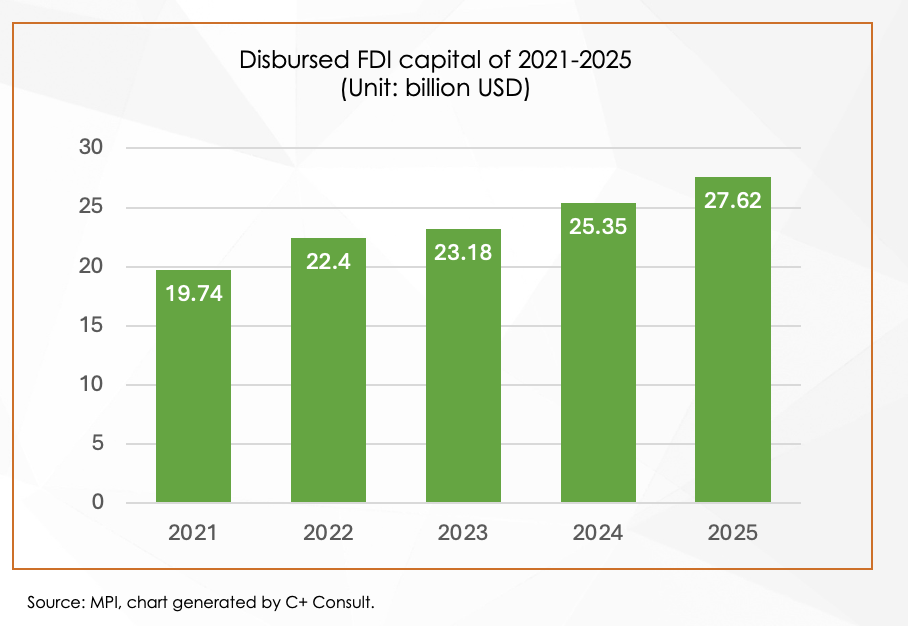
In 2025, foreign direct investment into Vietnam recorded a strong performance, with FDI disbursement reaching its highest level in five years, reflecting improvements in the investment environment, project implementation capacity, and sustained confidence from foreign investors.
According to the General Statistics Office (Ministry of Finance), total registered FDI as of 31 December 2025 reached USD 38.42 billion, up 0.5% year-on-year. Notably, capital contributions and share acquisitions surged by 54.8%, amounting to USD 7.03 billion across 3,587 transactions, highlighting the growing role of M&A activities and strategic restructuring in Vietnam.
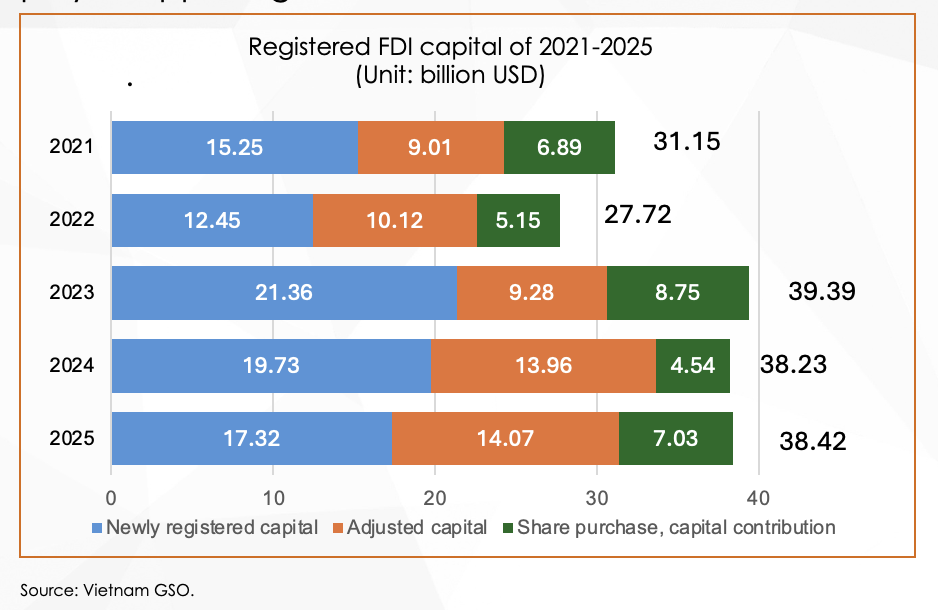
By sector, manufacturing and processing remained the primary investment magnet, attracting USD 9.80 billion, accounting for 56.5% of newly registered capital, reaffirming Vietnam’s position in global manufacturing and supply chains. Real estate ranked second with USD 3.67 billion (21.2%), while other sectors attracted USD 3.85 billion.
In terms of investment partners, among 90 countries and territories with newly licensed projects, Singapore led with USD 4.84 billion (27.9%), followed by China (21%), Hong Kong (10%), Japan (9.4%), and Sweden (5.8%).
Most notably, total realized FDI in 2025 is estimated at USD 27.62 billion, up 9% year-on-year, marking the highest level during 2021–2025. Of this, manufacturing and processing accounted for 82.8%, continuing to serve as the backbone of Vietnam’s FDI growth.
KEY LOCAL HIGHLIGHTS IN FDI ATTRACTION
As competition for FDI increasingly diverges across localities, investment attractiveness is no longer determined solely by market size, but by long-term planning, infrastructure readiness, industrial land availability, and differentiated policy frameworks.
In 2025, the Vietnamese Government introduced and adjusted several major policies related to planning, infrastructure, and investment incentives, significantly reshaping the positioning of centrally governed cities within the national FDI landscape. This report provides in-depth insights into selected key cities as follows:
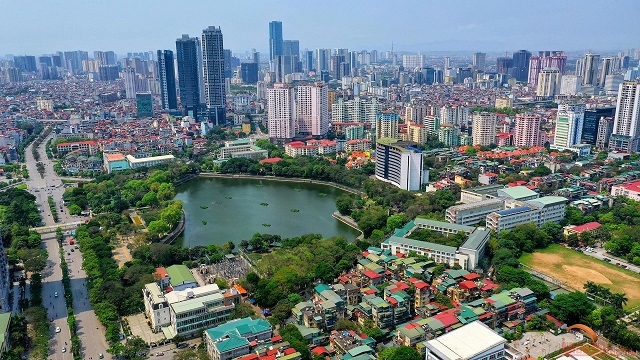
HANOI – National hub for knowledge, innovation, and the digital economy
Hanoi is steadily realizing its vision of becoming a modern, smart, and green capital, serving as Vietnam’s center for governance, science and technology, and high-quality human resource development. Its development strategy, anchored in the digital economy, green growth, and strategic infrastructure, is creating new opportunities for FDI in high-tech industries, value-added services, and innovation-driven sectors.
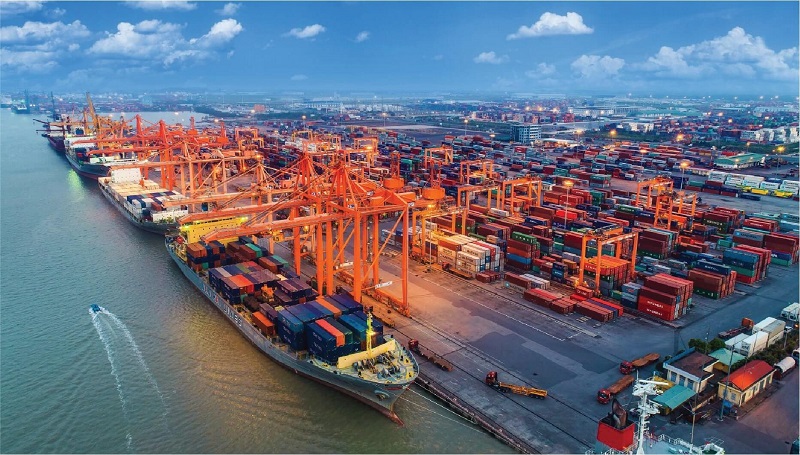
HAI PHONG – Northern Vietnam’s gateway for port-led industrial and logistics development
Hai Phong has reinforced its position as the only maritime gateway of Northern Vietnam and one of the country’s leading industrial and logistics centers. Deep-water ports, a comprehensive multimodal transport network, and the piloting of a Free Trade Zone are opening new investment space for FDI in high-tech manufacturing, supporting industries, energy, and port-related logistics.
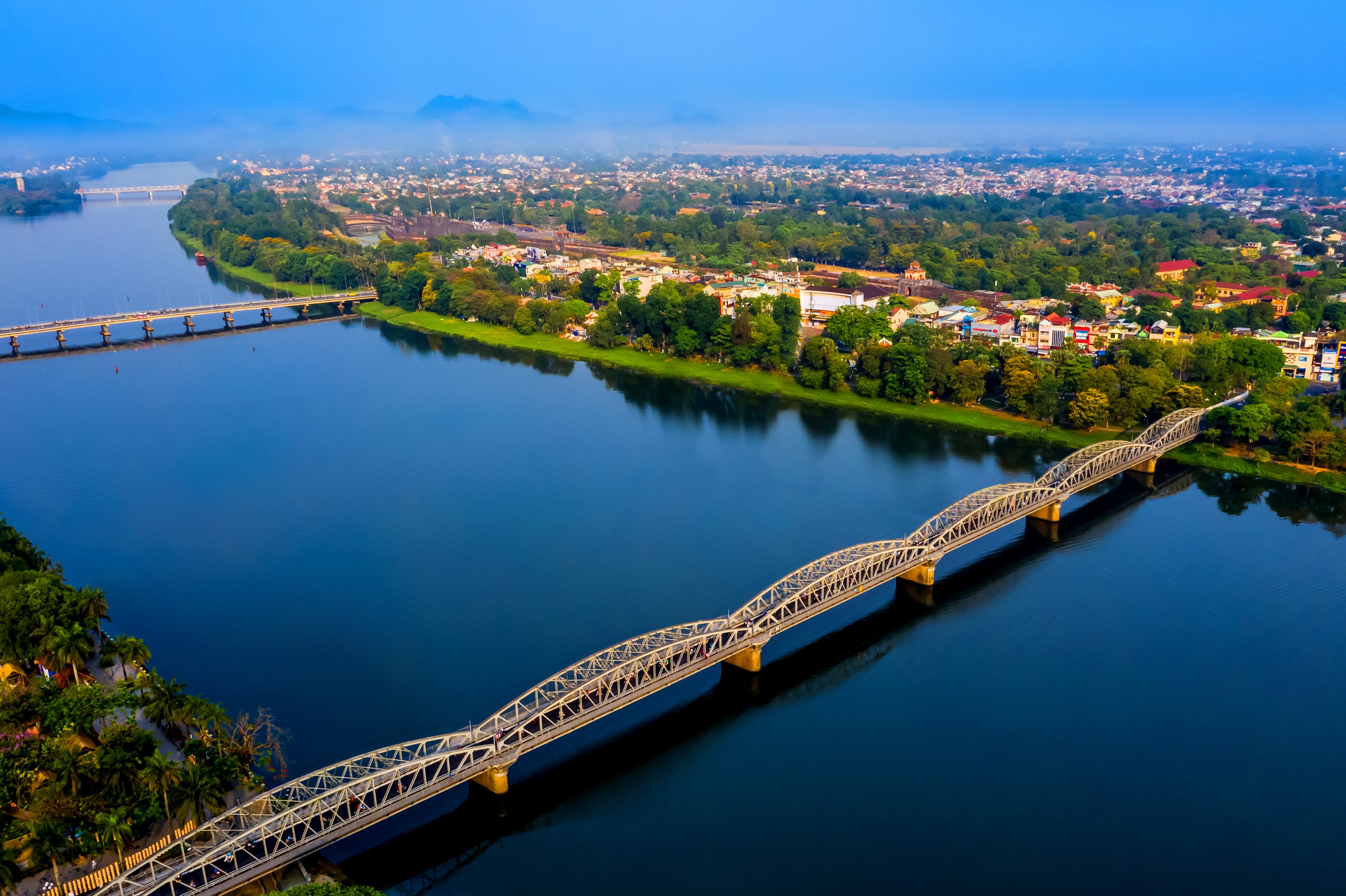
HUE – A heritage city pursuing green growth and a knowledge-based economy
Hue is positioned as a regional center for culture, education, and specialized healthcare, while advancing a green and smart city model closely aligned with heritage preservation. Its development strategy emphasizes high-quality services, clean industries, and human capital development, laying the groundwork for selective, sustainable, and long-term FDI inflows.
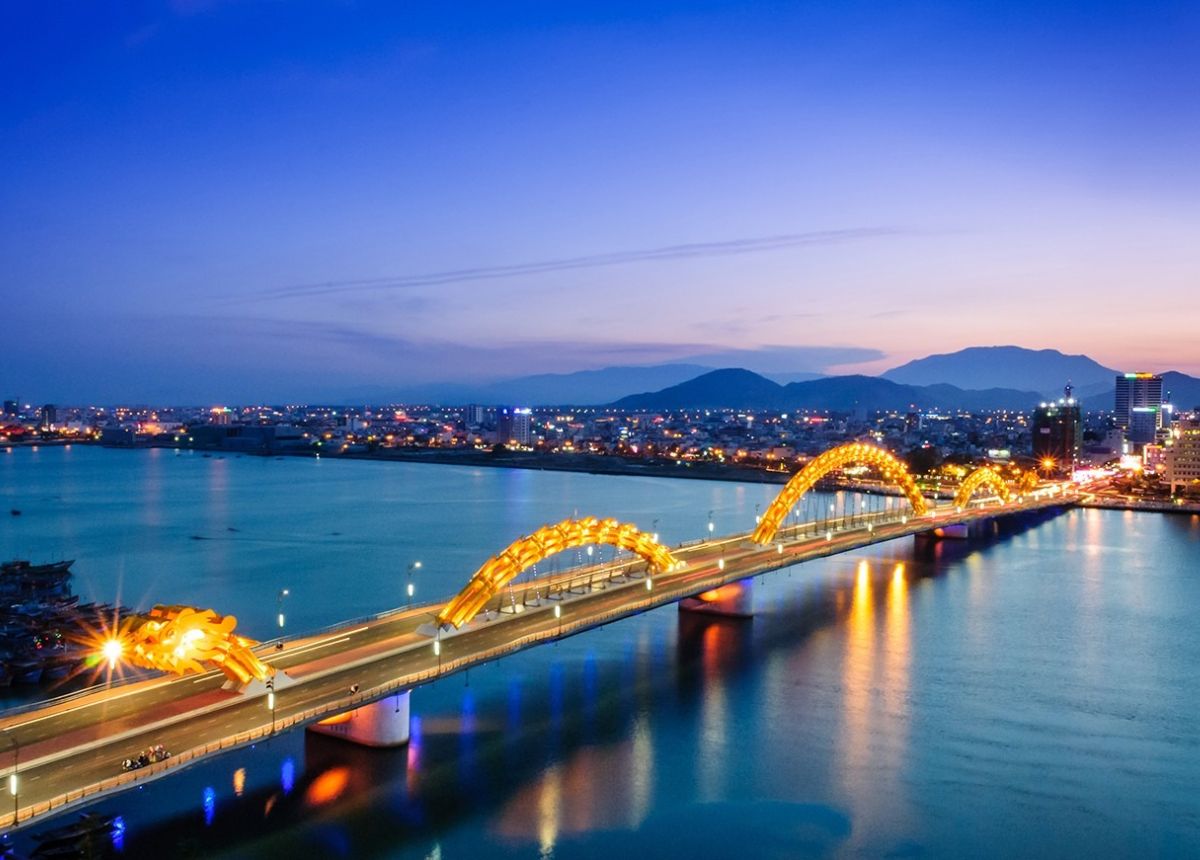
DA NANG – Central Vietnam’s hub for high-tech industries, finance, and logistics
Da Nang stands out as a dynamic growth pole, with development driven by high-tech industries, logistics, and international financial and trade services. Modern infrastructure, a transparent investment climate, and functional zones such as the High-Tech Park and Free Trade Zone continue to attract FDI into advanced manufacturing, IT, aviation-related industries, and high-value services.
HO CHI MINH CITY – Vietnam’s megacity and leading financial and technology hub
Ho Chi Minh City remains a multi-functional growth engine, focusing on high-tech manufacturing, logistics linked to seaports and airports, Free Trade Zones, and the International Financial Centre. Large-scale infrastructure projects—including urban railways and Long Thanh International Airport—are reshaping regional connectivity and reinforcing the city’s central role in Southern Vietnam’s FDI ecosystem.

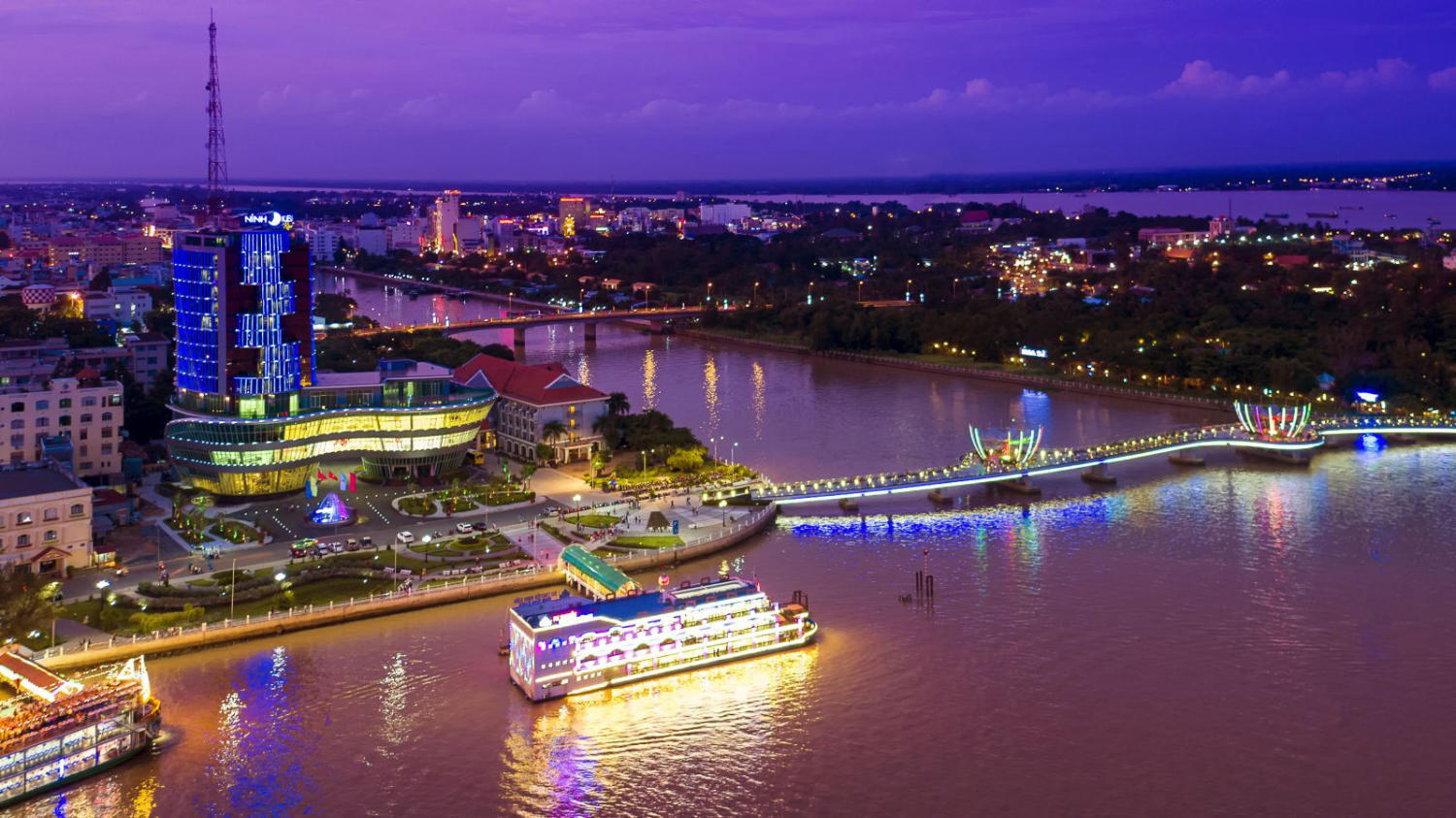
CAN THO – Logistics and green industrial hub of the Mekong Delta
Planned as a national growth pole and the economic center of the Mekong Delta, Can Tho is emerging with a focus on airport-city development, port-based logistics, and regional connectivity. Rapid expansion of industrial zones, combined with strategies targeting green industries, renewable energy, and agro-processing, is strengthening the city’s role in diversifying FDI destinations toward Southwest Vietnam.
✨ Download the full FDI Vietnam 2025 Report for in-depth analysis of national trends, city-level investment dynamics, and strategic insights for site selection and investment planning.
Vietnam FDI Report 2025