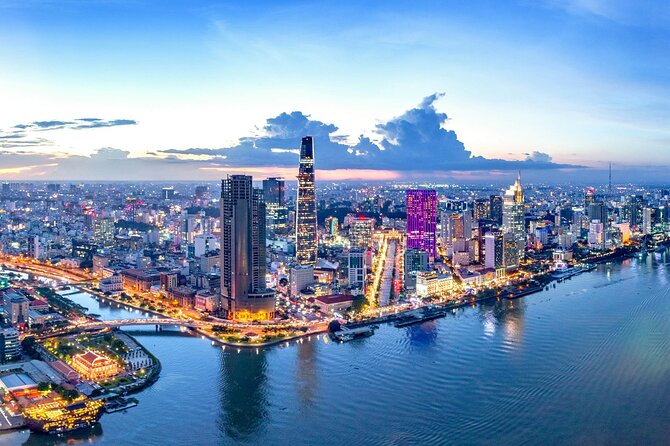
Ho Chi Minh City – Vietnam’s Dynamic Economic Hub
Following recent administrative expansion, Ho Chi Minh City is set to become the largest locality in Vietnam in terms of GRDP scale, reinforcing its role as the primary economic locomotive of southern Vietnam and a key driver of growth for both the Southeast region and the Mekong Delta.
Strategically located in the southern key economic region, providing strong connectivity to major industrial and logistics corridors.
Key Indicators (as of end of 2025)
- Location: Bordering Tay Ninh, Dong Thap, Dong Nai, and Lam Dong provinces
- Area: 6,772.59 km²
- Population: 14,002,598 people (approximately 13% of Vietnam’s population)
(The total population after the merger is based on 2024 statistics)
- GRDP growth rate: 8.3%
- Total GRDP: VND 3.03 quadrillion, accounting for 23.5% of Vietnam’s GDP
- GRDP per capita: Estimated at USD 8,944, approximately 7 times the national average
- Industrial Production Index (IIP): Estimated growth of 8.9% (compared with 5.7% in the same period last year)
- Trade Performance
- Exports: USD 95.8 billion, up 7.0% year-on-year
- Imports: USD 98.2 billion, up 7% year-on-year
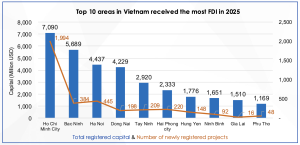
- Foreign Direct Investment (FDI) attraction: Ho Chi Minh City leads with a total registered investment capital of over 7 billion USD, accounting for 18.4% of the total investment capital nationwide, an increase of 5.8% compared to the same period last year. Ho Chi Minh City leads the country in the number of new projects (accounting for 49.1%), the number of projects with adjusted capital (accounting for 28.5%), and capital contributions through share purchases (accounting for 71.4%).
- Tourism: Total tourism revenue increased 36.1% year-on-year, reflecting the city’s continued recovery and growing attractiveness as an international destination.
Current Infrastructure
Ho Chi Minh City benefits from a rapidly expanding infrastructure network that supports trade, logistics, and international connectivity, including:
- Tan Son Nhat International Airport – Vietnam’s busiest airport
- Cat Lai Port – the largest and busiest container port in Ho Chi Minh City
- Cai Mep – Thi Vai Deep-Sea Port – one of Southeast Asia’s key international transshipment hubs
- Can Gio International Transshipment Port (investment policy approved in January 2025)
- Metro Line No. 1, marking the first operational urban railway line in the city
Strategic Development Vision for a Future Megacity
1. A Strategic Vision for a Future Megacity
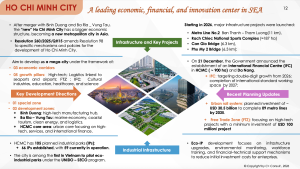
Ho Chi Minh City is pursuing an ambitious vision to transform itself into a regional megacity, guided by a development framework summarized as “3 Regions – 1 Special Zone – 3 Economic Corridors – 5 Growth Pillars.”
The development model aims to enhance regional integration, strengthen global connectivity, and position the city as a leading hub for finance, technology, logistics, and innovation in Southeast Asia.
1.1 Three Key Development Regions
The metropolitan development strategy integrates the strengths of surrounding provinces to create a powerful economic cluster:
- Binh Duong: positioned as a high-tech manufacturing and innovation hub, attracting advanced industries and technology-driven investments.
- Ba Ria – Vung Tau: focusing on marine economy, coastal tourism, clean energy, and logistics, leveraging its strategic deep-sea port system.
- Ho Chi Minh City core area: serving as the urban nucleus, concentrating on high-tech industries, advanced services, and international financial activities.
1.2 Three Strategic Economic Corridors
To support regional integration and economic expansion, the city is developing three major economic corridors: North–South Corridor, Eastern Corridor, East–West Corridor
These corridors are designed to strengthen transportation connectivity, facilitate industrial development, and enhance logistics efficiency across the southern economic region.
1.3 Five Key Growth Pillars
Ho Chi Minh City’s development strategy focuses on five priority sectors that will shape the city’s long-term competitiveness:
- High-tech manufacturing and innovation-driven industries
- Logistics integrated with seaports and international airports
- Free Trade Zone (FTZ) development
- International Financial Center (IFC)
- Cultural industries, education, healthcare, and science & technology
Together, these development pillars aim to position Ho Chi Minh City as a regional hub for advanced manufacturing, global finance, and knowledge-based industries, supported by strong regional connectivity and a modern urban infrastructure system.
Beyond economic expansion, the city also places significant emphasis on human capital development and quality of life, two critical factors that underpin sustainable growth and long-term investment attractiveness. Ho Chi Minh City continues to strengthen its role as a leading national center for education and training, while pursuing comprehensive reforms to enhance the quality of education and workforce capabilities.
At the same time, the city prioritizes healthcare development, social well-being, and inclusive urban growth. Efforts are focused on improving public health services, enhancing residents’ quality of life, and promoting sustainable social development. Through these initiatives, Ho Chi Minh City aims to ensure social progress, equity, and human security, while creating a dynamic and livable metropolitan environment for businesses, investors, and talent.
2. Major Infrastructure Projects Driving Growth
Infrastructure development plays a central role in the city’s transformation. Several large-scale projects have recently been launched to enhance connectivity and support long-term urban expansion.
On January 15, Ho Chi Minh City initiated construction of four major infrastructure projects:
- Metro Line No. 2 (11 km), connecting the city center with the northern and northwestern districts.
- Rach Chiec National Sports Complex (approximately 187 hectares), designed to host major domestic and international sporting events.
- Can Gio Bridge (6.3 km), replacing the existing ferry service and significantly improving connectivity between the city center and the southern coastal area.
- Phu My Bridge 2 (6.3 km), linking Ho Chi Minh City with Long Thanh International Airport in Dong Nai Province. The project is notable as the first multi-level roadway solution applied in the city.
Earlier, on December 19, construction preparations also began for the Ben Thanh – Can Gio railway line, designed with a planned operating speed of 350 km/h, which will strengthen the connection between the city center and the southern coastal region.

3. Industrial Infrastructure and Sustainable Development
Following recent administrative adjustments, Ho Chi Minh City’s industrial planning includes 105 industrial parks, of which 66 have been officially established and 59 are currently in operation.
The city is also one of the first localities in Vietnam to pilot Eco-Industrial Parks (EIPs) under the UNIDO – SECO program, reflecting its commitment to sustainable industrial development.
The eco-industrial park initiative focuses on several key priorities:
- Expanding industrial park scale and improving infrastructure
- Strengthening environmental monitoring systems
- Developing skilled human resources
- Providing financial and technical support mechanisms to help businesses reduce initial investment costs
This approach aims to create environmentally responsible and resource-efficient industrial ecosystems, enhancing the attractiveness of Ho Chi Minh City for international investors.
4. Recent Planning Updates and Strategic Breakthroughs
In December of 2025, the Vietnamese Government announced the establishment of an International Financial Center (IFC) following a “one center – two destinations” model, located in Ho Chi Minh City (approximately 900 hectares) and Da Nang.
For Ho Chi Minh City, three strategic breakthroughs have been identified to drive the city’s next phase of development:
4.1 International Financial Center (IFC)
Ho Chi Minh City is advancing plans to establish an International IFC as a key driver of its next phase of economic growth. The city targets double-digit economic growth from 2026, with internationally standardized office space and financial infrastructure expected to be operational by 2027. The IFC will prioritize attracting globally trained professionals with strong expertise in finance, technology, and digital innovation.
In preparation for this initiative, Ho Chi Minh City has already established partnerships with several prominent international institutions and technology firms, including Nasdaq, Binance, TikTok, and the New York Institute of Finance. These organizations are considered “anchor partners”, playing a strategic role in helping the IFC rapidly establish operational standards, access core financial technologies, and develop its initial ecosystem.
In the near term, the city will continue to expand and strengthen its network of carefully selected international strategic partners, focusing on key pillars of the financial center, including capital markets, digital finance, green finance, and financial talent development. Over the medium term, Ho Chi Minh City aims to move beyond a traditional “partner attraction” approach toward a co-development model, where international institutions, financial firms, and technology companies actively collaborate in building a comprehensive and globally connected financial ecosystem.
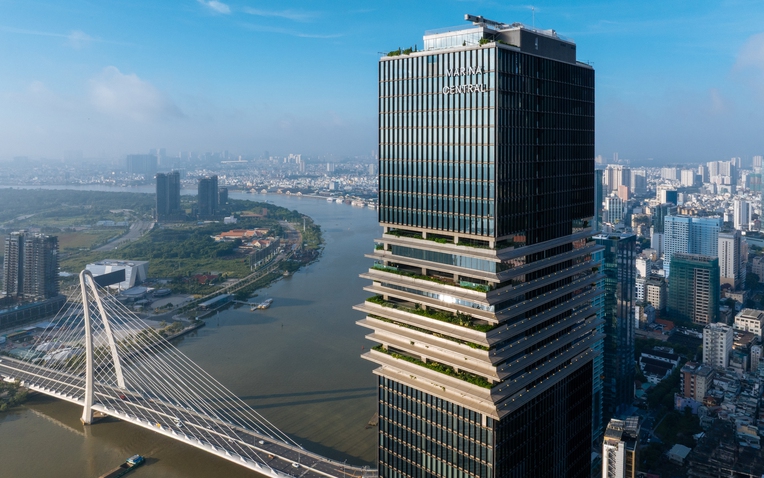
International Financial Center (IFC) in HCMC
4.2 Urban Railway Development
Ho Chi Minh City plans to invest approximately USD 30.5 billion to complete nine metro lines by 2035, significantly improving urban mobility and supporting sustainable urban growth.
4.3 Free Trade Zone (FTZ)
The planned FTZ aims to attract high-tech investment projects with a minimum scale of USD 100 million per project, with the potential to contribute an additional 1.5–2% to the city’s GRDP.