
Resolution No. 10/NQ-TW: Vietnam Will Have Investors Who Share Its Development Vision
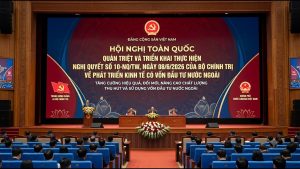
Resolution 10-NQ/TW on the development of the foreign-invested economic sector is expected to drive a shift in FDI attraction—moving from input-based incentives to encouraging projects that generate value for the economy. According to Mr. Ngo Nghi Cuong, Managing Director of C+ Consulting And Investment Corporation, this will transform how investors structure their projects, develop supply chains, and partner with Vietnam.
New rules of the game for FDI capital flows
Q: Resolution No. 10-NQ/TW signals a shift from input-based investment incentives to a performance-based support mechanism linked to investors’ commitments, such as technology transfer, localisation, and green transformation. In your view, how will this policy shift affect the investment strategy, and long-term operational planning of new FDI projects in Vietnam?
This shift represents a fundamental transformation in Vietnam’s approach to attracting foreign direct investment (FDI): moving beyond a strategy focused primarily on capital inflows towards building a strategic national investment platform. Foreign investors planning new projects in Vietnam will therefore need to understand and adapt to this new policy direction in order to achieve long-term, sustainable growth alongside the country’s development.
For new FDI projects, the first change will be reflected in investment application preparation. At present, foreign investors are generally required to demonstrate financial capacity, manufacturing processes, production capacity, workforce requirements, project implementation schedules, and other standard investment information. Going forward, however, a competitive investment proposal is likely to require a more comprehensive presentation of the project’s technological content, the establishment of research and development (R&D) activities in Vietnam, local sourcing plans, supplier development strategies, programmes for developing Vietnamese engineering talent, as well as energy consumption, carbon emissions, and other sustainability-related commitments so on.
The second change is that the site selection strategy must be considered more carefully. Low land rental costs alone will no longer be a sufficient competitive advantage. Instead, investors are expected to assess locations based on a broader set of strategic considerations, including infrastructure connectivity, access to renewable energy, the availability of skilled engineers, the maturity of local supplier ecosystems, and the implementation capacity of provincial authorities.
From a long-term operational perspective, investors developing new FDI projects are also likely to incorporate a “Vietnam Value Creation Roadmap” into their investment strategy. This approach is well aligned with Vietnam’s evolving investment incentive framework. Under Resolution No. 10, priority will increasingly be given to projects that voluntarily commit to and effectively implement advanced technologies, environmentally sustainable production, meaningful contributions to innovation, research and development, and other activities that enhance the country’s long-term economic competitiveness.
Taken together, these policy changes are expected to reshape how foreign investors design new investment projects—not only in terms of strategic positioning, but also with respect to financial planning and long-term operational strategy.
Q: As investment incentives become increasingly tied to measurable outcomes, how do you expect foreign investors to adapt the way they design projects and manage their operations? What do you see as the biggest challenges, as well as the most significant opportunities, for FDI enterprises pursuing long-term investment strategies in Vietnam?
Resolution No. 10 signals a fundamental shift in Vietnam’s investment incentive policy – from traditional input-based incentives toward a support mechanism linked to the actual performance and fulfillment of project commitments. However, at this stage, the Resolution does not specify the performance indicators, evaluation methodology, or the corresponding levels of support that investors may receive. These elements will need to be further defined through implementing regulations to be issued by the Government and other competent authorities.
Malaysia provides a useful point of reference. Effective from 1 March 2026, the country introduced its New Incentive Framework (NIF) for the manufacturing sector, which the Malaysian Government officially describes as an outcome-based incentive framework. Under this system, investment incentives are tied to measurable economic outcomes against a clearly defined assessment framework. Based on annual performance reports, foreign-invested enterprises are classified into different performance tiers and receive incentive packages accordingly. Projects that fail to meet the minimum performance requirements may not qualify for the incentives at all.
As a result, foreign investors will need to rethink how investment projects are designed from the outset by incorporating the value that a project is expected to create for Vietnam into the initial investment planning process. The specific requirements will ultimately depend on the performance evaluation criteria to be issued by the Government in the future. However, investors should expect greater emphasis on factors such as the level of value added generated in Vietnam, the roadmap for developing and integrating local suppliers into the supply chain, research and development (R&D) activities, the adoption of ESG principles, and contributions to Vietnam’s Net Zero commitments, among other strategic objectives.
In my viewpoint, the greatest challenge – and at the same time the greatest opportunity – for future FDI projects in Vietnam lies in whether investors genuinely share Vietnam’s long-term development vision. Resolution No. 10 is likely to reduce the country’s appeal to investors whose primary competitive advantage depends on low labour costs, inexpensive energy, or short-term investment strategies. Conversely, long-term investors that are committed to delivering on their investment commitments and operating in sectors that Vietnam prioritizes for development are likely to view this policy shift as an attractive opportunity to establish and expand their operations in the country.
However, it should be emphasized that a performance-based incentive regime combined with post-investment evaluation can only be successful if the level of uncertainty is sufficiently low. In addition to having clear and measurable evaluation criteria, investors also require a transparent and consistent post-investment evaluation process.

CBD of Ho Chi Minh City
Connecting Vietnamese enterprises with the FDI sector
Q: Vietnam aims to have around 10,000 domestic enterprises integrated into FDI supply chains by 2030. In your opinion, how should multinational corporations develop a roadmap for strengthening local suppliers in order to align with the new policy direction while enhancing supply chain resilience and optimising production costs?
In reviewing this issue, I found that Samsung has collaborated with the Ministry of Industry and Trade (MOIT) and the former Ministry of Planning and Investment (MPI) to implement a multi-tier supplier development framework. Samsung’s approach follows a structured four-stage roadmap designed to develop domestic companies, followed by assessment and supplier classification before integrating them into its global supply chain. According to Samsung’s representatives, through these collaborative programmes, the number of Vietnamese Tier 1 and Tier 2 suppliers participating in Samsung’s supply chain increased from 25 companies in 2014 to 306 companies in 2023.
It should be clarified that this was not a supplier development roadmap that Samsung had established before entering Vietnam. However, with the Government’s target of developing 10,000 domestic enterprises to participate in the supply chains of the FDI sector, both existing foreign-invested enterprises and new investors should regard this as an important parameter that may influence their overall investment efficiency.
Developing local suppliers cannot be achieved within a short period, and the roadmap will inevitably vary depending on the industry and the capabilities of domestic enterprises. FDI enterprises will need to conduct their own assessments to identify components, raw materials, and services with localisation potential, and develop medium- and long-term procurement demand maps. This information should then be communicated to the domestic business community through local authorities or relevant industry associations.
At present, Resolution No. 10 does not specify which industries or sectors the targeted 10,000 domestic enterprises participating in the supply chains of the FDI sector are expected to belong to, nor how they will be distributed. In this context, I would like to raise a question: which should come first in setting this target—the demand of the FDI sector or the capabilities of domestic enterprises? From a business perspective, the common criteria for supplier selection include product quality, price competitiveness, on-time delivery capability, product origin and traceability, and the consistency of production processes. In addition, each industry and business sector has its own specific requirements.

C+ ‘s booth at VIFA ASEAN 2026 on 2 ~ 5 September 2026.
Q: How local companies can improve themselves to upgrade from Tier 2 to Tier 1 suppliers? During this progress, what do FDI companies support, ranging from technology transfer and workforce development to support mechanisms for quality standards?
This is a question that cannot be fully answered by domestic enterprises alone. As mentioned earlier, there are common criteria that FDI enterprises use when selecting local suppliers. Vietnamese companies should regard investment in management capability, technology, and human resources as top priorities. The adoption of international quality management systems, investment in modern equipment, standardisation of production processes, development of technical talent, strengthening R&D capabilities, and fostering innovation will ultimately determine their ability to participate more deeply in global value chains.
If FDI enterprises need to establish a roadmap for developing local suppliers in response to the new policy direction, domestic manufacturers must also develop their own capability enhancement roadmap to penetrate global supply chains. Throughout this process, domestic enterprises can seek practical guidance from FDI companies on the specific areas that require improvement in order to meet supplier qualification standards or advance to a higher supplier tier.
FDI enterprises will not transfer technology, at least not within the scope of this buyer–supplier relationship. Instead, they support local suppliers in strengthening their capability to absorb advanced production practices and continuous improvement through workforce training, production process enhancement, improving product quality consistency, ensuring compliance with safety standards, so on. A typical example is Samsung, which sends experts to suppliers’ factories to help them reduce defects, reduce inventory, support the implementation of lean manufacturing, adopt Six Sigma methodologies, increase automation, and strengthen risk management..
In practice, the supply chain collaboration between Vietnamese enterprises and FDI companies requires an intermediary layer of coordination, namely the Government and its new policy directions. Clearer implementation guidelines, well-defined evaluation criteria, and appropriate incentive mechanisms are needed to ensure that Resolution No. 10 achieves its objectives of attracting high-quality FDI while enhancing the country’s overall competitiveness. This, in turn, will help Vietnamese enterprises integrate more deeply into global supply chains.
Full Vietnamese article was published and posted on baodautu.vn: https://baodautu.vn/viet-nam-se-co-nhung-nha-dau-tu-dong-hanh-voi-tam-nhin-phat-trien-d656506.html