Vietnam Launches First-Ever Private Economic Efficiency Index as Ho Chi Minh City Takes the Lead
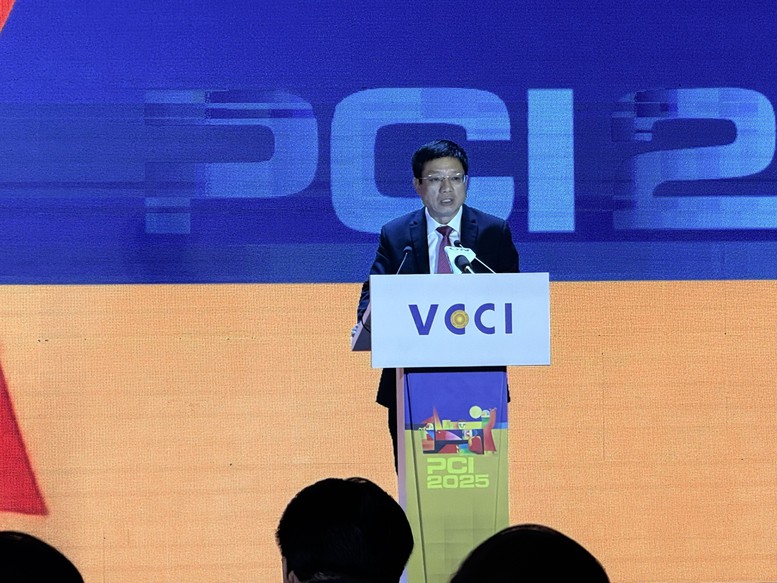
Vietnam’s private sector is entering a pivotal stage of transformation as the Vietnam Chamber of Commerce and Industry (VCCI) officially released the Vietnam Private Economy Report and PCI 2025. For the first time, the report introduces the Private Economic Efficiency Index (BPI), a new benchmark designed to evaluate the actual growth performance and innovation capacity of private enterprises nationwide.
The launch marks a significant milestone in Vietnam’s economic reform agenda, coming one year after Resolution 68-NQ/TW on private sector development was issued. It also reflects the country’s broader administrative restructuring, including the reduction of provinces and cities from 63 to 34 and the transition toward a two-tier local government model.
Vietnam’s Private Sector Shows Strong Recovery Momentum
According to the report, Vietnam now has more than one million active enterprises and approximately 6.1 million household businesses, together employing around 26 million workers, equivalent to 50.2% of the national workforce.
In 2025 alone, the country recorded a historic 297,500 newly established businesses, representing a 27.4% increase compared to the previous year. Additionally, 85.7% of enterprises reported maintaining or expanding their operational scale, signaling renewed business confidence after the economic difficulties of 2023 and 2024.
VCCI Chairman Ho Sy Hung emphasized that Vietnam’s private sector has moved beyond a defensive stage and is now accumulating internal strength for a new phase of growth. However, he noted that this momentum can only be sustained if major bottlenecks related to market access, financing, and policy transparency are effectively addressed within the next 12 to 18 months.
Four Major Challenges Continue to Constrain Businesses
Despite the positive outlook, the report highlights several persistent structural challenges facing Vietnam’s private sector.
The most pressing issue remains market demand, with 60.2% of businesses reporting difficulties in finding customers — the highest level recorded in the past five years.
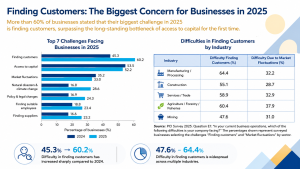
Access to capital also continues to be a major obstacle. Around 75.5% of enterprises stated they could not secure loans without collateral, while the collateral requirement ratio in Vietnam significantly exceeds that of regional economies such as Malaysia and Thailand.
Policy predictability remains another concern. Only 6–8% of businesses said they could regularly anticipate policy changes, and more than half relied on social media to obtain information about draft regulations.
Meanwhile, informal costs continue to affect the business environment. Approximately 26% of enterprises reported incurring unofficial expenses during licensing procedures, nearly three times higher than the regional average.
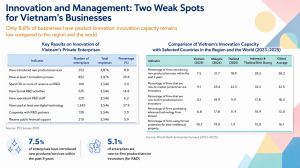
Innovation capacity also remains limited. Only 8.8% of Vietnamese businesses engaged in product or service innovation activities, significantly lower than regional peers such as Malaysia and Thailand.
PCI 2.0 Introduced to Measure Governance Quality More Effectively
The 2025 report also marks the launch of PCI 2.0, the most comprehensive upgrade in the history of the Provincial Competitiveness Index after 21 years of implementation.
The new PCI framework includes nine sub-indices and 98 indicators, covering areas such as market entry, transparency, access to resources, administrative compliance costs, fair competition, business support policies, legal institutions, and proactive local governance.
Instead of publishing a traditional provincial ranking, VCCI now groups provinces and cities into six governance quality categories, aligning with international practices and the country’s new administrative structure. The national median PCI score in 2025 reached 63.90 out of 100, indicating that reform momentum continues nationwide.
The top-performing localities in governance quality include Da Nang, Bac Ninh, Hai Phong, Phu Tho, and Quang Ninh.

Ho Chi Minh City Leads the New BPI Rankings
One of the most significant highlights of the report is the pilot release of the BPI, which focuses on measuring private-sector development and innovation output rather than institutional inputs.
The 2025 BPI results place Ho Chi Minh City at the top with 5.67 points, followed by Hanoi with 5.41 points and Quang Ninh with 5.33 points.
The report also found a meaningful statistical relationship between PCI governance quality in 2022 and BPI performance in 2025, suggesting that policy reforms typically require around three years to generate measurable economic outcomes.
According to VCCI leaders, the introduction of PCI 2.0 and BPI represents a shift from simply improving administrative procedures toward building a more competitive and innovation-driven private sector ecosystem. The long-term goal is to help Vietnam achieve two million active enterprises by 2030 through deeper institutional reforms and stronger support for business growth.